The Styles Case
The Mysterious Affair at StylesThe Styles Case is the poisoning death of Emily Inglethorp and the investigation that turns a seemingly direct accusation into a more intricate account of inheritance, manufactured evidence, and a delayed poison dose. Arthur Hastings presents it retrospectively, explaining that, after public interest and sensational rumours had persisted, he was asked by Hercule Poirot and the family to set down the story. Its central movement is from the deathbed scene and a verdict against unknown perpetrators to Poirot’s account of how the apparent clues fit together—and why the intended murder did not occur on the planned night.
Origins and the death at Styles
Hastings’s involvement began after he had been invalided home from the Front and spent several months in a convalescent home. Given a month’s sick leave and unsure what to do, he encountered John Cavendish, whom he had known only slightly for years, though as a boy he had often stayed at Styles, John’s mother’s home in Essex. John invited him there, connecting Hastings’s personal return from the war to the household in which the case would unfold.
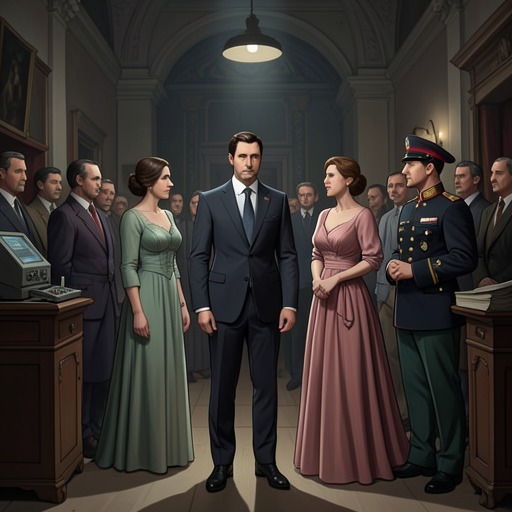
The crisis came when John and Lawrence Cavendish forced open Emily Inglethorp’s bolted bedroom door. They found her suffering violent convulsions. John lit the gas and sent Annie for brandy, while Hastings opened the corridor door. As dawn approached, Mary Cavendish appeared with the dazed Cynthia; the household gathered, unable to relieve Emily’s renewed attacks. Dr. Bauerstein entered, and Emily cried out his name, identifying Alfred Inglethorp, before falling motionless. The scene supplied a striking clue, but not a simple explanation of responsibility.
Inheritance and competing accusations
At the inquest, the household’s financial arrangements became part of the inquiry. Emily’s will from the previous August left her entire fortune to her elder stepson, John Cavendish, after minor legacies to servants. John explained that his father’s will had already provided for Lawrence at Emily’s death, while John would inherit the property and bear the expense of maintaining Styles. Hercule Poirot raised the legal complication: under English law, Emily’s remarriage had automatically revoked that earlier will. The apparent certainty of the inheritance therefore concealed a change in its legal basis.
Evidence about a later document complicated matters further. Two witnesses said Emily had summoned them and asked them to sign at the bottom of a long paper beneath her signature; blotting paper covered what was written above it. At John’s trial, the prosecution argued that, after a quarrel with her stepson on July 17, Emily had made a new will in favour of Alfred, and that the document was found destroyed in her bedroom grate the following morning. The prosecution also portrayed John as financially desperate and alleged that Emily had confronted him about an intrigue with Mrs. Raikes. These were the Crown’s claims, not the final explanation of the crime.
The defence disputed the prosecution’s interpretation of the quarrel and of John’s whereabouts. It maintained that he had not understood that his voice could be mistaken for Alfred’s, and that he had believed Emily had quarrelled twice. For July 16, it placed him at Marston’s Spinney, where an anonymous, blackmailing note had summoned him; he waited there and returned without a witness who could confirm his story, but had kept the note. The defence also argued that John, formerly a barrister, knew Emily’s earlier will had been revoked by her remarriage, and promised evidence that someone else had destroyed the new will. It directed attention to the case against Lawrence as well. The competing accounts made legal knowledge, family loyalties, and the ownership of Styles part of the evidential contest.
Poison, timing, and a misleading case
The medical evidence established that Emily had died from strychnine poisoning. The post-mortem indicated a dose of at least three-quarters of a grain, probably one grain or slightly more; accidental ingestion was considered very unlikely. At first, the obvious possibilities seemed to be her after-dinner coffee or the cocoa she usually drank in the middle of the night. But the specialist explained that strychnine generally acted within one to two hours, while Emily’s symptoms began in the early hours after coffee thought to have been taken around eight. A sample of the remaining cocoa contained no strychnine. The sequence of dose and symptoms thus resisted the most immediate explanations.
Poirot’s suspicions turned in part on the extraordinary abundance of strychnine clues: it appeared in Emily’s tonic, in the poison sold by Albert Mace at the village shop, and in evidence suggesting that someone in the household had handled it. He cautioned against taking an apparently complete case at face value. The evidence against Alfred, he argued, was too conclusive: someone seeking to incriminate him had tightened the net so much that a single cut could free him. His reasoning distinguishes incriminating appearance from a tested explanation; the clues could be real and still have been arranged to misdirect.
The trial’s account made that danger plain. The prosecution alleged that John had bought strychnine in disguise as Alfred on July 16, hoping to cast suspicion on his stepfather, and noted that Alfred had produced an alibi. But Poirot’s earlier objection to the apparent case against Alfred and the competing evidence at trial left the accusations unresolved until the final reconstruction. The inquiry was not solved merely by deciding which person the most vivid clue appeared to indict; it required a coherent account of the poison’s route and timing.
Reconstruction and the final link
Poirot explained why neither the coffee nor the cocoa had delivered the fatal dose. A damp stain on the carpet smelled strongly of coffee and held small china splinters. Poirot connected it to the treacherous table: Emily had set down her cup, the table had tilted, and the cup had broken. He proposed that she picked up the fragments, put them by the bed, then heated and drank her cocoa. That account made sense of the stain and broken china while preserving the evidence that the cocoa itself was poison-free and the coffee had not been drunk.
The remaining answer was Emily’s medicine. Poirot said that the strychnine was already present in the mixture, in the tonic prescribed by Dr. Wilkins, rather than introduced into it as a separate act at the moment of serving. This changed the significance of the repeated poison references: the relevant question was not simply who had purchased or handled strychnine, but how the existing medicinal mixture could account for the fatal dose and its timing.
Poirot also reconstructed the intended schedule. The bell wire to Emily’s room had been cut on Monday, and Cynthia was away that night, leaving Emily isolated in the right wing. The plan, as he described it, was for the fatal dose to be taken then, but Emily forgot her medicine while hurrying to a village entertainment; the following day she lunched away from home. She therefore took the fatal dose twenty-four hours later than anticipated. That delay, rather than merely frustrating the plan, left the final proof that Poirot needed.
He produced three thin strips of paper and identified them as a letter in the murderer’s handwriting, addressed to Evelyn. The letter had not clearly warned Emily in time: Poirot said she realized she was in danger without understanding its method. Its existence supplied the last link in his chain and turned the case from a struggle among suspicious appearances into an account of an intended poisoning, its postponement, and the evidence that ultimately revealed it.
Verdict and narrative significance
The inquest’s conclusion had been “Wilful Murder against some person or persons unknown.” The verdict confirmed deliberate homicide without identifying a killer, leaving the central question open. The subsequent prosecution of John and the competing claims made at trial show how readily inheritance, the destroyed will, the village purchase of strychnine, and the quarrel could be arranged into a persuasive accusation without yet resolving who had engineered the death.
The book’s retrospective form makes that uncertainty part of the case’s design. Hastings introduces the account as a response to continuing rumours, while Poirot’s investigation repeatedly revises what apparently strong evidence means. The ruined will and changed inheritance establish stakes; the medical timing tests theories; the damp coffee stain, china fragments, tonic, and delayed dose connect physical traces to a sequence of actions. The decisive explanation does not come from one spectacular clue, but from fitting these separate details together and recognizing that evidence made to look conclusive may disclose the hand that manufactured it.